

Why DMV Couples Are Flying Their Own DJ to Mexico (And How to Do It Right)

For couples in the Washington D.C. area, a wedding isn't just a party. It's a production. Whether you are used to the marble halls of a Smithsonian museum or the refined estates of Middleburg, Virginia, the standard for professionalism is non-negotiable. When these same couples decide to head to Mexico for a destination wedding this July, they often assume they have to settle for whatever "package" the resort provides.
They don't. And the smartest ones aren't settling.
More and more DMV couples are choosing to fly in their own curated vendor teams rather than rolling the dice on a resort's in-house entertainment. The result is a destination wedding that feels just as polished and intentional as anything you'd pull off at a premier venue in Georgetown or along the Virginia wine country. Here's how it works, what it costs, and why the investment is worth every dollar.
The Hidden Logistics: The "Electronics Tax" and Customs
One of the biggest mistakes a high-end couple can make is attempting to have their US-based team "bring their own gear." In 2026, Mexico’s customs regulations are more stringent than ever. Any professional electronics brought into the country are subject to a 16% Value Added Tax (IVA) plus potential import duties.
If your team tries to bring $15,000 worth of cinema cameras or audio consoles through Cancun International, they could be hit with a surprise tax bill in the thousands before they even exit the terminal. This is why the "DMV Strategy" is to rent the heavy gear locally and fly in the elite talent.
Sharon Kopp: Your Diplomatic Liaison
This is where Sharon Kopp at Barefoot Bridal becomes your most valuable asset. Much like a diplomat, Sharon handles the "foreign relations" between you and the Mexican resort management. She specializes in negotiating "Talent-Only" fees. Since your pros aren't bringing in outside equipment, just their world-class expertise, Sharon leverages her relationships to reduce or waive the standard "Outside Vendor" fees.
For DMV couples who are used to working with top-tier planners and coordinators, having someone like Sharon on the ground in Mexico is the difference between a smooth experience and a logistical nightmare. She knows which resorts are flexible, which ones push back, and exactly how to position your request so that the resort sees your curated team as an asset rather than a complication.
Curation Over Convenience
By working with Sharon to clear the logistical hurdles, you can fly in a curated lineup that beats any "resort package":
The Vibe: Top-tier DJs from The Goat Audio who know how to read a sophisticated D.C. crowd. Whether you need a wedding DJ in Washington D.C. or elite audio services in Virginia, they ensure the sound is curated to your taste, not a generic resort playlist. And when your DJ has already worked with you through months of planning, building your custom timeline and perfecting every transition, that preparation shows up on the dance floor in a way no last-minute resort assignment can match.
The Visuals: Cinematic storytelling from High Skies Media, ensuring your videography matches the luxury of your surroundings.
The Live Element: Soulful live saxophonists like McWavy or guitarists who collaborate with the DJ for an epic live-hybrid performance. The combination of a DJ and live musician creates moments that a solo DJ setup or a resort band simply can't replicate. If you're curious about how DJ add-ons can elevate your event, live musician pairings are one of the most impactful upgrades you can make, and they travel beautifully to a destination wedding.
The Timeline for Planning a Destination Wedding with a Curated Team
If you're thinking about flying in your own vendors, the planning timeline looks a little different than a local DMV wedding. Here's what I'd recommend:
10 to 12 months out: Lock in your destination wedding planner. This is where Sharon Kopp at Barefoot Bridal is invaluable, because she starts the resort negotiations early. The sooner she's involved, the more leverage she has on outside vendor fees.
8 to 10 months out: Book your curated vendor team. Top-tier DJs, videographers, and musicians book destination dates quickly, especially for peak months like July and December. Don't assume your favorite vendors will be available just because the wedding is "out of town." Destination dates are some of the most sought-after bookings we get at The Goat Audio.
6 months out: Finalize the equipment rental plan. Sharon and your vendors will coordinate on what gear needs to be sourced locally in Mexico. This includes sound systems, lighting rigs, and any production elements. Your DJ and videography teams will spec out exactly what they need, and Sharon's local contacts handle the sourcing.
3 months out: Confirm travel logistics. Flights, accommodations, and on-site schedules for your vendor team. Most couples either cover travel directly or build it into the vendor's fee. Either way, it's a fraction of the cost compared to shipping $30,000 worth of equipment across the border.
1 month out: Final walkthrough (virtual or in-person) with your planner and all vendors to confirm the timeline, backup plans for weather, power requirements, and ceremony-to-reception transitions.
Why Sound Matters Even More at a Destination Wedding
Here's something most couples don't think about until they're standing on the beach at their rehearsal dinner: outdoor venues in Mexico have unique acoustic challenges that a resort DJ isn't equipped to solve.
Wind is the biggest issue. A beachfront ceremony with an underpowered speaker system means your guests in the back rows can't hear your vows. Period. An experienced DJ who has worked outdoor events knows how to position speakers, use delay systems, and adjust EQ on the fly so that every word carries clearly, even with a breeze coming off the water.
Then there's the noise ordinance factor. Mexican resorts have strict sound curfews, often cutting off amplified music by 10 or 11 PM. A skilled DJ plans for this. That means front-loading the high-energy moments, building the dance floor peak earlier in the night, and knowing exactly how to transition into an acoustic or low-volume close that still feels intentional rather than abrupt. If you've ever read my wedding DJ timeline guide, you know timing is everything. That's doubly true when you're working against a hard cutoff.
A resort DJ will play until someone tells them to stop. A professional DJ plans the entire arc of the night around the curfew so your guests never feel like the party ended too soon.
The Real Cost Breakdown
Let's talk numbers, because this is usually the question that comes up first. Flying in a curated vendor team sounds expensive, and on the surface, the line items are higher than a resort package. But the math tells a different story when you break it down.
A typical resort entertainment package in Cancun or Los Cabos runs $1,500 to $3,000. That gets you a staff DJ with basic equipment. Add a generic photo booth and you might be looking at $3,500 to $4,500 total.
Flying in a curated team (DJ, videographer, and a live musician) typically costs $8,000 to $15,000 all-in, including talent fees, travel, and accommodations. That's a real number, and it's meaningfully higher than the resort option.
But consider what you're actually comparing. That resort package gives you a DJ who has never spoken to you before the day of your wedding, playing from a generic playlist, with no MC skills, no coordination with your other vendors, and no backup plan if something goes wrong. Your curated team has spent months preparing for your specific event, knows your music inside and out, and brings the same level of execution you'd expect at a top-tier wedding in the DMV.
For couples already spending $50,000 to $150,000 on a destination wedding, the difference between the resort package and a curated team is 5 to 10 percent of the total budget. And it's the 5 to 10 percent your guests will actually remember.
What Your Guests Experience (And Why It Matters)
Your guests just flew to Mexico for your wedding. They took time off work, booked flights, arranged childcare, and committed to celebrating with you. The least they deserve is an experience that feels intentional.
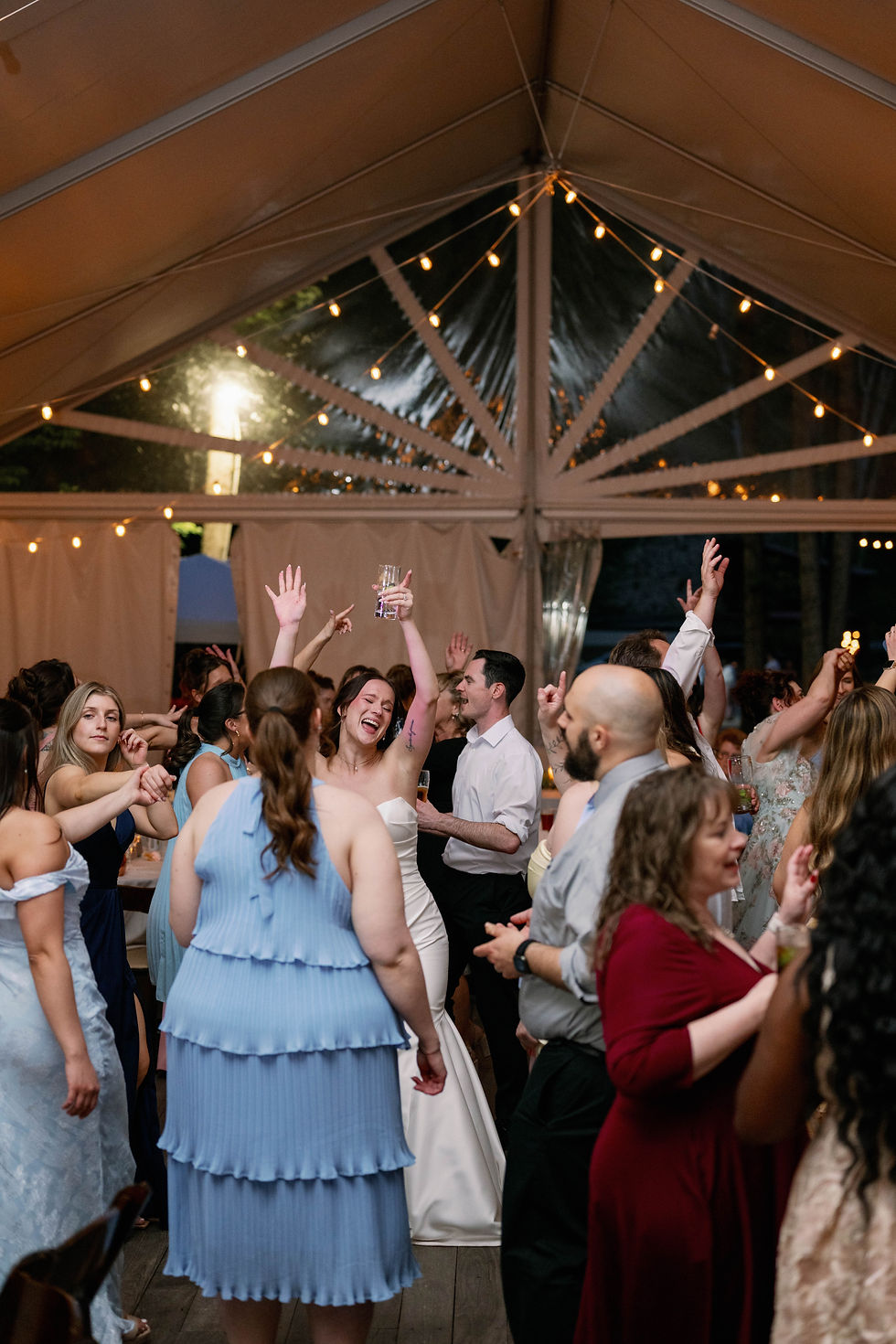
When you fly in a professional MC, the difference is immediate. Your guests are greeted by name during introductions. The toasts are timed perfectly. The energy in the room builds naturally rather than lurching between awkward silence and sudden noise. And when the dance floor opens, the music isn't a random shuffle of Top 40 hits. It's a curated journey that reflects who you are as a couple.
I've seen the difference firsthand. At destination weddings with a resort DJ, there's usually a moment around 9 PM where half the guests drift off to the pool bar because the energy has flatlined. With a curated team, that moment doesn't happen. The room stays together because the entertainment is pulling them in, not pushing them away.
That's the return on investment that doesn't show up on a spreadsheet but shows up in every photo, every video, and every conversation your guests have about your wedding for years afterward.
A great wedding DJ and MC combination doesn't just play music. They hold the room together. And when you're in an unfamiliar venue in another country with guests who may not know each other well, that connective tissue matters more than it does at any local wedding.
Frequently Asked Questions
Can I bring my own DJ to a resort in Mexico?
Yes, but there are logistics to navigate. Most resorts charge an "outside vendor fee" for bringing in entertainment that isn't part of their in-house package. A destination wedding planner like Sharon Kopp at Barefoot Bridal specializes in negotiating these fees down or getting them waived entirely, especially when your team is flying in as talent-only without outside equipment.
Do I need to ship DJ equipment to Mexico?
No, and you shouldn't try. The customs duties and taxes on professional electronics can add thousands to your costs. The smarter approach is to rent production equipment locally in Mexico and fly in just the talent. Your DJ and production team spec out what they need, and your planner sources it through trusted local rental companies.
How far in advance should I book a DJ for a destination wedding?
At least 8 to 10 months. Destination wedding dates are premium bookings, and top DJs and MCs fill those spots early. Peak months like July and December go the fastest.
Is it worth the extra cost to fly in my own DJ instead of using the resort's?
If entertainment matters to you, yes. The resort DJ will play music. A curated DJ will create an experience. The price difference is real, but for couples already investing $50,000 or more in a destination wedding, the upgrade typically represents less than 10 percent of the total budget and has the single biggest impact on how your guests remember the night.
What if the resort has a noise curfew?
Most Mexican resorts enforce sound curfews between 10 and 11 PM. An experienced wedding DJ plans for this by building the dance floor energy earlier and structuring the timeline so the peak moments happen well before the cutoff. A resort DJ often doesn't adjust for this, which means your party can feel like it ends abruptly right when it's getting good.


Comments