

What Atlanta Couples Get Wrong About Destination Wedding Entertainment (And How to Fix It Before It's Too Late)

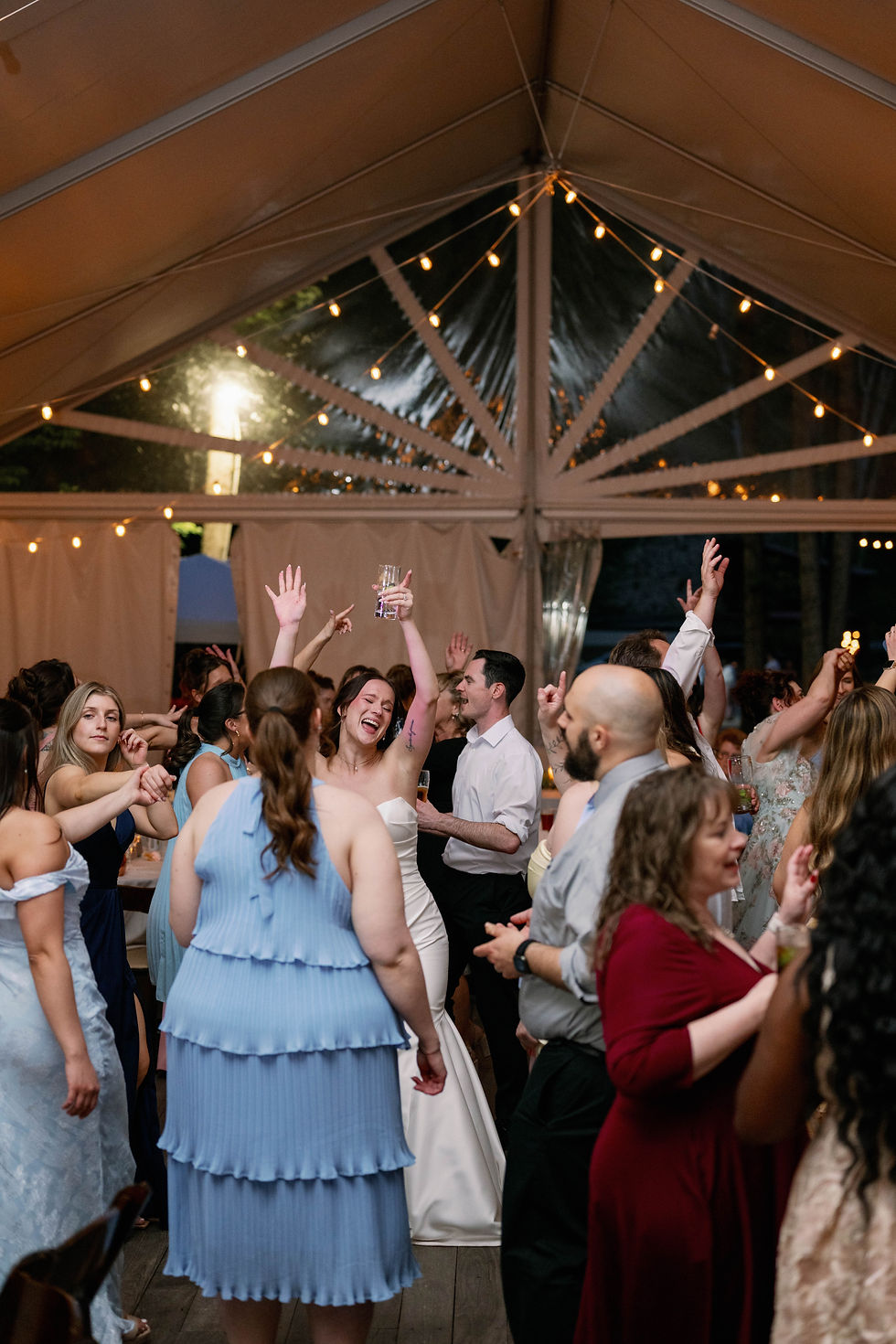
Atlanta couples know what a good party looks like. You've been to weddings at The Estate, The Biltmore Ballrooms, and Summerour Studio where the DJ had the floor packed from the first song to the last. You've seen what happens when the entertainment is on point: people dance until their feet hurt, the energy in the room is electric, and nobody wants to leave.
So why do so many Atlanta couples, people who would never settle for a mediocre DJ at home, make critical entertainment mistakes when they take the wedding to Mexico?
It's not because they don't care. It's because destination weddings introduce variables that don't exist at a local wedding, and most couples don't know about them until it's too late to fix. I'm Brandon, founder of The Goat Audio, and I've seen these mistakes happen enough times to know exactly where they come from and how to avoid them. Here are the seven biggest ones.
Mistake 1: Defaulting to the Resort DJ Package
This is the most common mistake, and it's the one with the biggest impact on your night. The resort offers a DJ as part of the wedding package. It's convenient. It's cheaper than flying someone in. And on paper, it checks the box.
But here's what the resort package actually gives you: a staff DJ who works multiple events per week at the same property, plays from a standard playlist, and met you for the first time 30 minutes before your ceremony. They don't know your music. They don't know your crowd. They have no idea that your family goes off when Frankie Beverly comes on, or that your college friends need at least two Outkast songs or the night is a failure, or that your grandmother requested a specific Motown song for the mother-son dance three months ago.
An Atlanta wedding has a rhythm that a resort DJ cannot replicate. The buildup from cocktail hour to the reception, the way the energy shifts when the MC opens the dance floor, the specific moments where the right song at the right time turns a reception into something people talk about for years. That doesn't come from a generic playlist. It comes from a DJ who has spent months getting to know you.
If you want to understand what separates a professional wedding DJ from someone who just plays music, my guide on what to look for in a wedding DJ will show you exactly what questions to ask.
Mistake 2: Trying to Ship Equipment Across the Border
Some couples try to save money by having their DJ pack their own speakers and lighting rigs. This backfires almost every time.
Mexico imposes a 16% Value Added Tax (IVA) on professional electronics brought into the country, plus potential import duties. If your DJ is carrying $15,000 worth of gear through customs in Cancun, you could be looking at a $2,500 to $4,000 tax bill before anyone even reaches the resort. And that's assuming customs doesn't hold the equipment for inspection, which can delay your DJ's arrival by hours.
The fix is simple: rent the gear locally in Mexico and fly in the talent. A professional DJ can walk into any venue with a properly spec'd rental system and deliver the same performance they would at a wedding in Buckhead. The skill is in the person, not the serial number on the speaker.
Sharon Kopp at Barefoot Bridal coordinates with local production houses in Mexico to source the equipment your team needs. She knows which rental companies are reliable, what the real costs are, and how to ensure the gear is set up and tested before your DJ arrives. This is one of the biggest advantages of working with a destination wedding planner who understands the entertainment side of the equation.
Mistake 3: Ignoring the Noise Curfew
This one catches Atlanta couples especially hard because Atlanta receptions tend to run late. You're used to the party peaking at 11 PM and the DJ playing the last song at midnight. In Mexico, the resort is cutting the sound between 10 and 11 PM.
If your DJ doesn't plan for this (and resort DJs almost never do), your reception ends right when it's getting good. The dance floor is finally packed, the energy is at its peak, and then someone walks over and tells the DJ to shut it down. The night ends with confused guests and a couple who feels like the best part of their wedding was stolen.
A professional DJ builds the entire arc of the evening around the curfew. That means the dance floor opens earlier, the peak moments are front-loaded, and the transition at curfew time is designed to feel like a natural, intentional close rather than an abrupt shutdown. By the time the music stops, your guests should feel like the night reached its perfect ending, not like it was cut short.
I cover timeline strategy in detail in my wedding DJ timeline guide. If your DJ can't articulate a specific plan for working within a noise curfew, that's a red flag.
Mistake 4: Forgetting About Ceremony Sound
Couples spend months choosing their vows, their readings, and their ceremony music. Then they show up to an outdoor beach ceremony in Mexico and realize nobody past the third row can hear a word.
Wind is the enemy. An outdoor ceremony on the beach or in a garden, with even a moderate breeze, will swallow your vows whole if the sound system isn't positioned and powered correctly. A single speaker on a stand pointing forward is not enough. You need speakers angled to cover the full seating area, wireless microphones for the officiant and the couple, and someone who knows how to adjust levels in real time as the wind shifts.
Resort ceremony sound setups are almost always underpowered and poorly positioned. The speaker is placed where it's convenient for the staff to set up, not where it provides the best coverage for your guests. A professional wedding DJ who has worked outdoor events brings a completely different approach to ceremony sound, and it's often the difference between a ceremony your guests experienced and one they squinted through trying to lip-read your vows.
Mistake 5: Not Coordinating Entertainment with Your Other Vendors
At a local Atlanta wedding, your DJ, photographer, videographer, and planner usually know each other or have at least worked together before. They communicate naturally. The DJ knows to pause before the first dance so the photographer can get in position. The videographer knows when the MC is about to make the grand entrance announcement. The planner signals the caterer to clear plates before the toasts begin.
At a destination wedding, your curated team may be meeting the resort's events staff for the first time on the day of. If there's no pre-wedding coordination, things fall through the cracks. The photographer misses the first dance because nobody told them it was happening. The videographer's footage of the toasts has terrible audio because they didn't coordinate mic placement with the DJ. The caterer serves the main course during the grand entrance because nobody aligned the timelines.
The fix is a pre-wedding production meeting, either virtual (a few weeks before) or in-person (the day before at the resort). Everyone on the vendor team walks through the timeline together, confirms cue points, and identifies potential issues. Sharon Kopp at Barefoot Bridal runs this meeting as part of her coordination process, and it's one of the most valuable things a destination wedding planner does. Thirty minutes of alignment prevents hours of regret.
Mistake 6: Skipping the Welcome Party Entertainment
Many couples plan a welcome party as a casual meet-and-greet but don't think about the music. The result is a gathering where people stand around a pool bar in small clusters, making small talk over the sound of the resort's house music (which is either too loud, too generic, or both).
Music is what turns a social gathering into an event. It doesn't need to be a full DJ set. A curated background playlist at the right volume, running through a portable speaker or the venue's house system, transforms the energy of the welcome party. Something warm, relaxed, and intentional: jazz, bossa nova, neo-soul, or a laid-back mix of the couple's favorite artists.
This is the first time all of your guests are together. The vibe you set at the welcome party carries into the wedding day. If the welcome party feels thoughtful and curated, your guests show up to the ceremony already primed for something special. If it feels like an afterthought, you're starting from zero on the wedding day.
At The Goat Audio, destination wedding bookings include music planning for the full weekend, including the welcome party and the morning-after brunch. These aren't extras. They're part of the complete experience.
Mistake 7: Not Having a Backup Plan for Weather
Mexico in July is beautiful, but it's also unpredictable. Afternoon rain showers are common in Cancun and the Riviera Maya. If your ceremony is outdoors and it starts raining, you need a backup plan that doesn't just account for moving chairs inside. You need a backup plan for your entire production setup.
Moving a ceremony indoors changes the sound requirements. An outdoor speaker configuration that covers a beach seating area doesn't work in a ballroom, and vice versa. If your DJ hasn't planned for the possibility of a last-minute venue change, the indoor ceremony is going to sound either too quiet (speakers still set for outdoor coverage) or too loud (outdoor volume levels in an enclosed space).
A professional DJ arrives with a flexible setup plan. They've already walked through the backup venue (or seen photos and floor plans from Sharon), spec'd the equipment for both scenarios, and can adapt the setup within the time window available. This is another reason why flying in an experienced DJ matters more than relying on a resort staffer who has one setup and one approach.
Sharon Kopp at Barefoot Bridal confirms backup venue options with the resort early in the planning process and ensures every vendor knows the contingency plan before anyone boards a plane. When the rain starts at 3 PM on your wedding day, the only people who should be stressed are the clouds. Not you, and not your team.
The Common Thread
Every one of these mistakes comes from the same place: assuming that a destination wedding is just a local wedding in a different location. It's not. The venue is unfamiliar, the logistics are more complex, the timeline is compressed, and the margin for error is smaller. The couples who avoid these mistakes are the ones who recognize that distinction early and plan accordingly.
That means hiring a wedding DJ who has destination experience, not just talent. It means bringing in a planner like Sharon at Barefoot Bridal who knows the resort landscape and can anticipate problems before they happen. And it means treating entertainment as the cornerstone of your guest experience, not a box to check.
Frequently Asked Questions
How do I know if a DJ has real destination wedding experience?
Ask specific questions: How many destination weddings have you worked? How do you handle equipment when traveling internationally? What's your approach to a 10 PM noise curfew? How do you coordinate with a destination planner? If the answers are vague or generic, they haven't done this before. My guide on the questions every couple should ask before booking is a solid starting checklist.
Is the resort DJ ever good enough?
For couples who view music as pleasant background and aren't particular about the MC experience, a resort DJ can be adequate. For Atlanta couples who expect a packed dance floor, skilled mixing, and a professional MC who commands the room? No. The gap between "adequate" and "exceptional" is exactly what you feel on the dance floor.
What's the single most important thing I can do to avoid entertainment problems at my destination wedding?
Book your entertainment team early (8 to 10 months out) and make sure they're in direct communication with your destination planner. The coordination between your DJ and your planner is what prevents 90% of the problems listed in this article.
How much more does it cost to fly in a DJ versus using the resort?
A resort DJ package typically runs $1,500 to $3,000. Flying in a curated DJ with travel and accommodations typically costs $5,000 to $10,000 depending on the scope. For a destination wedding budget of $50,000 or more, that difference is 5 to 10 percent of the total investment and covers the single element your guests will remember most vividly.
Can I add live musicians to a destination wedding?
Absolutely. A live saxophonist or guitarist paired with a DJ is one of the most impactful upgrades you can make at a destination wedding. The live element travels well (no heavy equipment, just the musician and their instrument), and the sound of live music in an outdoor beach setting creates moments that a DJ-only setup simply cannot.
Don't Learn These Lessons the Hard Way
Your destination wedding happens once. Every mistake on this list is avoidable with the right planning, the right team, and the right planner coordinating the details. Don't let a generic resort package or a preventable logistics failure define the most important celebration of your life.


Comments