

The Perfect Wedding Reception Timeline: A DMV DJ's Minute-by-Minute Guide
Your wedding day is coming up fast. You've got the venue locked down somewhere in Alexandria or Silver Spring, you know what your photographer looks like, and your caterer is ready to go. But here's the thing most couples don't think about: what actually happens during those five or six hours between guests arriving and the last person leaving?
That's where a solid wedding DJ timeline becomes your best friend.
I've worked hundreds of weddings across the DMV, and I've seen what happens when there's no plan. Awkward silences during dinner. Dead energy on the dance floor. The ceremony delayed by thirty minutes because nobody coordinated timing. The bride and groom so stressed they're not even enjoying their own reception.
But when you nail the wedding DJ timeline? Everything flows. People have fun. You get all those moments you paid for.
Let me walk you through exactly how we structure a typical DMV reception from start to finish.
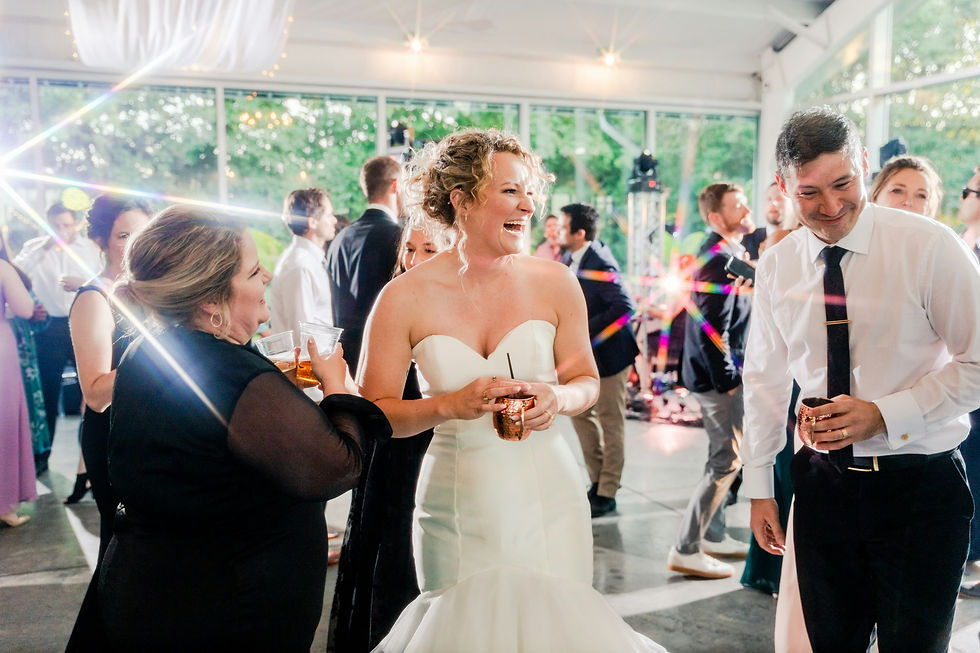
Setup: 3 hours Before Guests Arrive
This is invisible to your guests, but it's everything. Your DJ needs to be at the venue early. Really early. We're talking parking, unloading gear, testing every speaker, checking the microphones, testing the background music system, walking the room to understand acoustics, confirming the ceremony music levels, and making sure we know exactly where the bride and groom are coming in from.
In DC venues especially, you're dealing with older buildings that have weird acoustics. That beautiful brick wall in Dupont? Sounds completely different than the carpeted ballroom next door. We test this. Even the radio frequencies can get a bit dicey. We use Shure Frequency finder to make sure we're using a clean line.
We also confirm all the details: First dance song? What about the bouquet toss? Any traditions we need to know about? Any family drama we should know not to call on? (Yes, this happens.) We touch base with your caterer about timing and with your photographer about positioning for key moments.
This pre-game is why you hire an experienced DJ instead of letting your cousin with a laptop handle it.
Cocktail Hour
Guests are filtering in from the ceremony. This is typically 60 minutes while you're getting photos taken or doing a first look with your fiancé.
The wedding DJ timeline here is all about keeping energy light and sophisticated. We're playing background music, nothing loud. Jazz, classic soul, feel-good pop. Volume is conversation-friendly, sometimes we even pull the vocal range in songs down a few Dbs to give a little extra room for the human voice in the space. The goal is setting tone, letting conversations take place, not getting people dancing yet. Some couples want soft jazz vibes. Others want upbeat oldies. We adjust to what you asked for.
Servers are circulating. People are finding their way to the bar. This is the least stressful hour of the day for your guests, so we keep it that way.
Transition to Reception Room: 10-15 Minutes
Your photographer got their shots. Time to move people inside. We announce it, transition the music volume up slightly, and herd the crowd toward the ballroom or reception space. This is quick and painless.
We confirm with your Day of coordinator, photographer, banquet captain, all the key players, that all guests are seated before we move to the next phase.
Dinner Service: 45 Minutes to 1 Hour 15 Minutes
This is the longest block on your wedding DJ timeline, and it's intentional. People are eating. Conversations are happening. We keep background music going, but nothing distracting. Volume is moderate. The vibe is sophisticated dinner party.
Timing matters here. Your caterer needs time to serve apps, clear plates, serve entrees, clear again, and get ready for the cake cutting. If you've got a formal dinner program (speeches, toasts, parent dances), this is where some of that happens.
Here's what I tell couples: don't try to pack everything into thirty minutes. You'll feel rushed. Your guests will feel rushed. Spread it out. Let dinner actually be dinner. Also, PRO TIP - If you plan on going to tables to greet each guest, this will almost always take more time than you account for. It's really hard to walk away from old uncle Tom when he's about to give you a wedding gift, if it Aunt Judy is telling a sweet story about when you were a little kid in sports. Some ways to avoid this is not doing it at all, doing a mad dash from table to table for a quick photo, or just understanding it may eat up some dance time. You can always have your DJ come save you if you go over a specific time and want the party to get rolling!
In Maryland and Virginia venues, we've also got to keep an eye on noise ordinances. Weekday events especially need to keep energy reasonable during dinner service or you're going to get complaints from neighboring office buildings (looking at you, Arlington).
Formal Program: The Big Moments
This is where the wedding DJ timeline really shows its value. Here's the typical sequence:First Dance (2-3 minutes): Right after dinner, while people are still seated and paying attention. The DJ introduces you with your song. Everyone watches. It's intimate. It's special.
Parent Dances (if you're doing them): 2-3 minutes each. This is 4-6 minutes total if both sides are dancing. Some couples skip this, or even cut them short to one or two choruses only. That's fine. But if you're doing it, we give it space and respect.
Toasts and Speeches: 15-20 minutes total. This is where timing gets tricky. We hand the mic to the best man, maid of honor, parents, whoever. We keep the music low. We keep an eye on things so nobody monologues for ten minutes.
Cake Cutting: 5 minutes of ceremony, then maybe a fun cake feed moment. This is quick but memorable.
First Dance for Everyone: This should be a familiar song. One that's going to get the Aunties, cousins, Grand Mothers, Everyone one the dance floor together. Think generationally familiar hits.
Dancing Portion: 1 Hour to 2 Hours (Variable)
This is where your wedding DJ timeline becomes flexible, because it depends on your crowd and your energy.
Early in the dancing block, we're playing stuff that gets older guests and families engaged. Classics. Motown. Familiar pop. We're typically not playing hard rock, EDM, or trap music. We're building energy gradually.
As the night goes on, we read the room and start playing the nostalgic hits, the stuff you and your new life partner partied to in high school or college. If you're having a good time, your friends and family will have a good time! If younger guests are out dancing and having fun, we can shift toward higher energy. If the crowd is more conservative, we stay classic. A good DJ adjusts.
You've got the bouquet and garter toss somewhere in here, if you're doing those. That's another 5 or so minutes of structured fun.
Here's the real talk: by midnight or 1 AM, depending on your venue's curfew, energy naturally peaks and then drops. Some guests are exhausted. Some left. The dance floor might actually get tighter as the night goes on because you're left with the true party people.
Last Dance and Cleanup: Final 30 Minutes
We announce the last dance 15 minutes before your venue's curfew. You pick the song. We play it. This is your moment as a couple, one more time. People gather around. Lights might come down. It's the exclamation point to your night.
After that last song, we bring the energy down, wrap up the music, thank everyone, and get people moving toward the exits. In Northern Virginia and DC specifically, venues are strict about curfew, so we respect that.
Why the Wedding DJ Timeline Matters in the DMV
Every venue is different. A loft in Warehouse District DC is totally different from a country club in Bethesda, which is totally different from a historic estate in Leesburg, Virginia.
Some venues have hard curfews at 11 PM. Others go to 1 AM. Maryland and Virginia venues sometimes have different noise regulations than DC proper. Your DJ needs to understand these constraints and build your timeline accordingly so you don't get hit with any unexpected fines.
Also, DMV crowds are specific. You might have a multi-generational guest list with serious age spread. You might have a lot of younger professionals. You might have traditional families who want certain cultural elements. A good wedding DJ timeline leaves room for all of these.
The Bottom Line
Here's what I tell every couple I work with: your timeline isn't rigid. It's a roadmap. If dinner runs long, we adjust. If the speeches are shorter than expected, we move into dancing earlier. If Grandpa wants to dedicate a song to Grandma, and you're okay with us taking requests, we make it happen.
But having that roadmap is what makes the difference between a reception that feels chaotic and one that feels intentional. When everyone knows what's coming next, you all relax. You actually enjoy yourselves. That's what a proper wedding DJ timeline does. It gives structure so you can focus on celebrating.
If you're planning a DMV wedding and want to talk through your timeline, reach out. The Goat Audio handles both the DJ booth and the MC duties, so we're managing the whole flow of your night. We've got detailed timelines for weddings in DC, Maryland, and Virginia, and we know how to work within your venue's specific constraints.
Ready to build your perfect reception? Contact The Goat Audio at 909-918-6756 or visit thegoataudio.com. Let Brandon help you structure a wedding timeline that keeps your guests entertained and your day stress-free.


Comments